Early childhood is one of the most important stages of human development. During these years, children begin to understand the world around them, develop communication skills, explore their interests, and discover new ways to express themselves. Learning at this stage should not be limited to memorising information or completing worksheets. Instead, children need opportunities to experiment, imagine, create, and solve problems through enjoyable activities. A well-planned educational environment can make these experiences meaningful and enjoyable.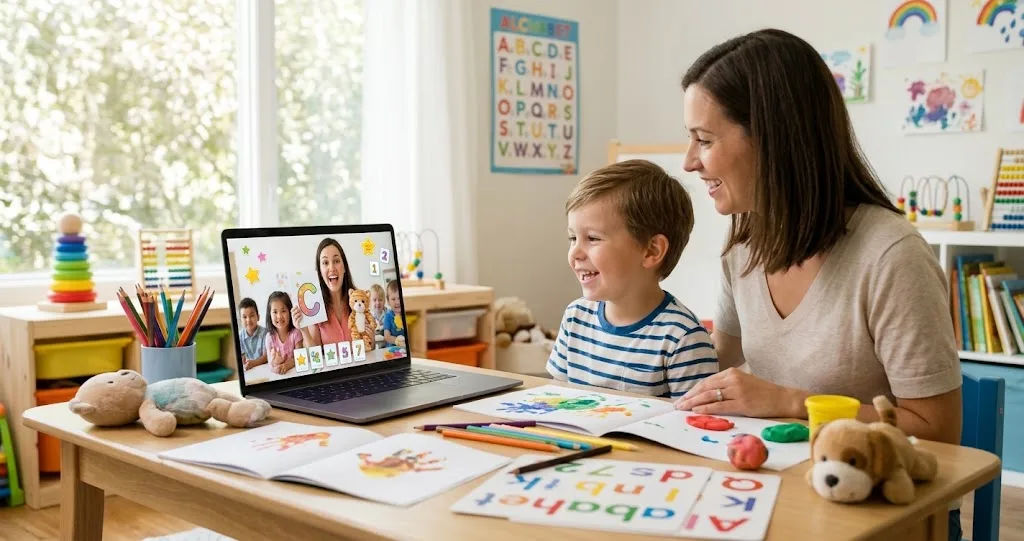
A thoughtfully designed Preschool Curriculum can play an important role in supporting creative learning. It provides children with opportunities to explore different materials, participate in imaginative activities, ask questions, and develop their own ideas. Rather than expecting every child to produce the same result, creative learning encourages individual expression and curiosity. Through storytelling, music, drawing, building, movement, and hands-on exploration, children can develop important skills while enjoying the learning process.
Parents and educators often wonder whether structured early education can leave enough room for imagination. The answer is yes. A balanced approach combines essential learning goals with flexible activities that allow children to make choices and explore their interests. When educators understand how creativity develops, they can create an environment where children feel comfortable experimenting, expressing themselves, and learning from their experiences.
Creative Learning in Early Childhood
Creative learning is an educational approach that encourages children to explore ideas, express themselves, and discover different ways of understanding information. It does not mean that children spend all their time drawing pictures or making crafts. Creativity can appear in almost every learning activity.
For example, a child who builds a tower using wooden blocks is exploring shapes, balance, measurement, and problem-solving. Another child who invents a story about imaginary animals is developing language skills, imagination, and communication abilities.
These experiences show that creativity is closely connected to intellectual development. Children learn by interacting with their surroundings, testing their ideas, and discovering what happens when they try something new.
Why Creativity Matters During Preschool Years
The preschool stage provides an important foundation for future learning. Children's brains develop rapidly during these years, making everyday experiences particularly valuable.
Creative activities allow children to:
-
Develop imagination and independent thinking.
-
Improve communication and vocabulary.
-
Explore emotions through artistic expression.
-
Strengthen problem-solving abilities.
-
Build confidence when sharing personal ideas.
-
Develop curiosity about the surrounding environment.
-
Learn to cooperate with other children.
These skills support academic development as well as social and emotional growth.
Creativity Is More Than Artistic Expression
Although painting, drawing, and crafting are common creative activities, creativity extends far beyond the arts.
Children demonstrate creativity when they find different ways to complete a puzzle, invent rules for a game, create a new character during storytelling, or discover alternative uses for ordinary objects.
Educators should recognise these everyday moments as valuable learning opportunities. This understanding helps create a classroom where children are encouraged to think independently instead of simply following instructions.
How Preschool Curriculum Encourages Creative Development
A balanced educational programme introduces children to different subjects while providing enough flexibility for exploration. It combines planned learning experiences with activities that develop imagination and independent thinking.
A strong Preschool Curriculum should recognise that children learn in different ways. Some enjoy visual activities, while others prefer movement, music, conversation, or hands-on experiments.
By including different teaching methods, educators can make learning accessible and interesting for a wider range of children.
Providing Opportunities for Exploration
Exploration is one of the most natural ways young children learn. They often understand new concepts by touching objects, observing changes, asking questions, and experimenting.
For example, teachers can provide water, sand, containers, leaves, stones, and other safe materials for supervised exploration.
Children might discover that some objects float while others sink. They may compare the weight of different materials or notice how water changes when poured into different containers.
These activities encourage curiosity without requiring children to memorise complicated explanations.
Encouraging Children to Make Their Own Choices
Creative learning becomes more meaningful when children have opportunities to make decisions.
Instead of asking every child to create an identical craft project, teachers can provide different materials and allow children to decide what they want to make.
One child might create a paper house, while another makes an imaginary vehicle or animal. Both children are practising creativity and developing fine motor skills.
Giving children choices also helps them become more independent. They begin to understand that their ideas matter and that there can be several ways to approach a task.
The Role of Art and Craft Activities
Art and craft activities are among the most effective ways to encourage creative expression in preschool classrooms. They allow children to experiment with colours, shapes, textures, and different materials.
These activities are especially valuable because they focus on the creative process rather than expecting perfect results.
Drawing and Painting
Drawing and painting provide opportunities for children to communicate ideas that they may not yet have the vocabulary to explain.
A child might draw a picture of their family, a favourite animal, or an imaginary place. Teachers can encourage children to describe their artwork and explain the ideas behind it.
Providing different types of paper, brushes, crayons, and washable paints can make these experiences more engaging.
Educators should avoid correcting every unusual shape or colour choice. A purple tree or a blue elephant may represent a child's imagination rather than a misunderstanding.
Paper Crafts and Creative Construction
Paper folding, cutting, gluing, and assembling materials help children develop hand-eye coordination and fine motor control.
Simple projects can include creating paper animals, greeting cards, masks, and decorative shapes.
Teachers can also provide recycled cardboard, paper rolls, fabric pieces, and safe packaging materials for supervised construction activities.
Children can transform these ordinary materials into buildings, robots, vehicles, or imaginary machines.
Such projects encourage resourcefulness and demonstrate that creativity does not require expensive supplies.
Using Storytelling to Develop Imagination
Storytelling is another important part of creative early education. It introduces children to characters, settings, events, and different perspectives.
When children listen to stories, they develop language skills and learn how ideas can be connected to create meaningful experiences.
Encouraging Children to Create Their Own Stories
Teachers can begin with a simple question, such as, "What would happen if a little bird discovered a hidden garden?"
Children can then suggest characters, events, and possible endings.
Some children may prefer to describe their stories verbally, while others might draw pictures or act them out.
These activities encourage imagination and help children organise their thoughts.
Using Puppets and Role-Playing
Puppets can make storytelling more interactive. Teachers can introduce different characters and encourage children to create conversations between them.
Role-playing activities allow children to explore everyday situations through imagination.
For example, a pretend grocery store can introduce counting, communication, cooperation, and decision-making. Children can take turns being customers, shopkeepers, and delivery workers.
A pretend hospital or restaurant can also help children understand different occupations and social responsibilities.
Supporting Creativity Through Music and Movement
Music and movement give children opportunities to express themselves physically and emotionally.
Some children find it easier to communicate through dancing, singing, and rhythm than through traditional classroom activities.
A comprehensive Preschool Curriculum can include music and movement experiences that support coordination, listening, memory, and confidence.
Singing and Rhythm Activities
Songs introduce children to language patterns, repetition, sounds, and new vocabulary.
Teachers can use simple musical instruments such as tambourines, drums, bells, and shakers.
Children can experiment with creating different rhythms and identifying changes in sound.
For example, educators might ask children to make a quiet rhythm like falling rain or a louder rhythm like a marching parade.
These activities encourage listening skills and creative thinking.
Dance and Creative Movement
Creative movement allows children to explore different ways of using their bodies.
Teachers can play music and invite children to move like different animals, objects, or natural elements.
Children might move like butterflies, walk like elephants, or pretend to be trees moving in the wind.
These activities improve physical coordination while encouraging imagination.
They also provide an enjoyable opportunity for children who prefer active learning instead of sitting for extended periods.
Outdoor Activities and Nature-Based Learning
Outdoor environments offer valuable opportunities for creative learning. Natural materials provide different textures, shapes, colours, and patterns that children can explore.
A garden, playground, or safe outdoor learning area can become an important extension of the classroom.
Exploring Natural Materials
Teachers can encourage children to observe leaves, flowers, stones, soil, and tree branches.
Children might collect fallen leaves and arrange them according to colour, size, or shape.
They can also use natural materials to create pictures, patterns, or imaginative structures.
These activities connect creativity with early science and environmental awareness.
Gardening and Plant Activities
Gardening gives children opportunities to observe how living things grow.
They can plant seeds, water plants, examine leaves, and observe changes over time.
Teachers can encourage children to predict what might happen when plants receive sunlight and water.
Children may also decorate plant pots or design signs for a classroom garden.
Such experiences introduce responsibility while encouraging observation and curiosity.
Learning Through Outdoor Challenges
Simple outdoor challenges can develop problem-solving skills.
For example, teachers might ask children to build a small structure using safe natural materials or create a pathway using different objects.
Children can work individually or in groups to test their ideas.
When something does not work, educators can encourage them to try another approach instead of immediately providing the answer.
Developing Problem-Solving and Critical Thinking
Creativity and critical thinking are closely connected. Creative children do not simply accept the first solution to a problem. They learn to consider possibilities and experiment with different approaches.
Early education should provide opportunities for children to develop these abilities through age-appropriate challenges.
Using Puzzles and Building Blocks
Puzzles encourage children to identify shapes, recognise patterns, and understand how different pieces fit together.
Building blocks provide another opportunity to develop spatial awareness and logical thinking.
Teachers can introduce challenges such as building the tallest stable tower or creating a bridge that can support a small toy.
Children can experiment with different arrangements and discover why some structures work better than others.
Asking Open-Ended Questions
Open-ended questions are particularly useful for encouraging independent thinking.
Instead of asking questions that require only a yes or no answer, educators can ask:
-
What do you think might happen next?
-
How could we make this structure stronger?
-
What other materials could we use?
-
Why do you think this object behaves differently?
-
Can you think of another way to solve this problem?
These questions encourage children to explain their thinking and consider different possibilities.
Creating a Classroom Environment That Supports Creativity
The classroom environment can strongly influence how comfortable children feel when expressing their ideas.
A creative classroom should be welcoming, organised, flexible, and filled with opportunities for exploration.
Setting Up Creative Learning Areas
Teachers can divide classroom spaces into different learning areas.
Useful examples include:
-
An art corner with drawing and painting materials.
-
A reading corner with picture books and comfortable seating.
-
A construction area with blocks and building materials.
-
A pretend-play area with costumes and everyday objects.
-
A science exploration area with safe observation materials.
These spaces allow children to choose activities based on their interests.
They also make it easier for educators to introduce different learning experiences throughout the day.
Providing Safe and Accessible Materials
Children should be able to access suitable learning materials without unnecessary difficulty.
Materials should be appropriate for their age and developmental abilities. Small objects that create choking risks, sharp tools, and potentially harmful substances should be avoided or carefully controlled.
Educators should also establish simple classroom rules for sharing, cleaning, and returning materials.
An organised environment helps children explore independently while maintaining safety.
The Importance of Teachers in Creative Learning
Teachers play an essential role in helping children develop creativity. Their responsibility is not simply to provide activities but also to create an atmosphere where children feel confident expressing their ideas.
A supportive teacher understands that children develop at different rates and may approach the same activity in different ways.
Acting as a Guide Instead of Controlling Every Activity
Creative learning requires a balance between guidance and independence.
Teachers should introduce activities, explain safety expectations, and provide suitable materials. However, they should also allow children enough freedom to experiment.
For example, when a child is building a structure, an educator might ask how the child plans to make it stronger rather than immediately showing the correct arrangement.
This approach encourages independent problem-solving.
Appreciating Effort Instead of Only Results
Children can become discouraged when they believe their work must look perfect.
Educators should recognise effort, imagination, and persistence instead of focusing only on the finished product.
Positive comments such as "You tried several ways to build that tower" or "I like how you used different shapes" help children understand the value of experimentation.
This builds confidence and encourages them to continue exploring.
How Parents Can Support Creative Learning at Home
Creative development should not stop when children leave the classroom. Parents can support the learning process by providing simple opportunities for exploration at home.
Everyday household activities can become meaningful learning experiences.
Encouraging Everyday Creativity
Parents can provide paper, crayons, building blocks, picture books, and safe recycled materials.
Children can use these supplies to create artwork, invent games, and build imaginative structures.
Parents do not need to organise complicated activities every day. Even a short drawing session or storytelling conversation can encourage creative thinking.
Allowing Children to Explore Their Interests
Some children enjoy music, while others prefer drawing, construction, pretend play, or outdoor exploration.
Parents should observe these interests and provide suitable opportunities to develop them.
Allowing children to choose activities helps them develop independence and discover their strengths.
It is also important to avoid comparing their creative abilities with those of siblings or other children.
Reducing Unnecessary Screen Dependence
Digital devices can provide educational experiences, but they should not replace hands-on activities, physical play, and personal interaction.
Parents can establish balanced routines that include outdoor exploration, reading, drawing, imaginative play, and conversations.
These experiences provide opportunities for children to interact directly with people and their surroundings.
Balancing Academic Learning and Creative Activities
Some parents worry that creative activities may reduce the time available for academic preparation.
However, creativity and early academic development do not have to compete with each other.
A well-organised Preschool Curriculum can introduce basic literacy, numeracy, science, and social skills through enjoyable experiences.
Combining Creativity With Early Literacy
Storytelling, drawing, puppet shows, and picture books can introduce children to letters, sounds, vocabulary, and communication.
Teachers can ask children to draw something from a story and describe what is happening in their pictures.
This combines artistic expression with early language development.
Introducing Mathematics Through Play
Mathematical concepts can be introduced through everyday creative activities.
Children can count building blocks, compare the sizes of objects, arrange materials by colour, and identify patterns.
Cooking activities with adult supervision can also introduce simple measurements and quantities.
These practical experiences help children understand mathematical ideas through real situations.
Connecting Creativity With Early Science
Science activities encourage children to observe, question, and experiment.
Simple experiences involving water, light, shadows, plants, and different materials can introduce basic scientific concepts.
Teachers can ask children to predict what might happen before an experiment and discuss the results afterwards.
This approach makes scientific learning interactive and memorable.
Assessing Creative Development Without Limiting Expression
Assessing children's development is important, but creative learning should not be judged using the same standards as a traditional test.
A child's drawing, story, or construction project may not have a single correct outcome.
Educators should focus on observing the learning process.
Using Observation and Learning Portfolios
Teachers can observe how children approach activities, communicate ideas, interact with others, and respond to challenges.
They can maintain portfolios containing children's drawings, photographs of projects, writing attempts, and examples of completed activities.
These records provide useful information about development over time.
Recognising Individual Progress
Every child develops creativity differently.
One child may confidently share stories with classmates, while another may prefer working quietly on a detailed construction project.
Both approaches can demonstrate meaningful creative development.
Educators should recognise individual strengths and provide suitable opportunities for further growth.
Parents can also receive regular updates about their children's interests, progress, and classroom experiences.
Common Challenges in Encouraging Creative Learning
Although creative learning offers many benefits, implementing it successfully can involve challenges.
Understanding these difficulties helps educators develop practical solutions.
Limited Time and Classroom Resources
Busy schedules and limited supplies can make creative activities difficult to organise.
However, creativity does not always require expensive equipment.
Teachers can use recycled cardboard, paper, fabric scraps, natural materials, and ordinary classroom objects.
Short creative activities can also be included within existing lessons.
Different Learning Needs and Abilities
Children have different interests, communication styles, and developmental abilities.
An activity that is enjoyable for one child may be difficult for another.
Educators should offer different ways to participate and provide additional support when necessary.
Flexible activities help ensure that every child has opportunities to express themselves.
Pressure to Focus Only on Academic Results
Some educational environments place too much emphasis on worksheets, memorisation, and early academic performance.
Although foundational skills are important, children also need time for play, imagination, movement, and exploration.
Schools should develop balanced learning plans that recognise the value of both academic and creative development.
Choosing a Preschool That Values Creative Learning
Parents looking for an early education programme should consider how the school approaches creativity.
A good learning environment should provide structured educational experiences without limiting children's ability to explore.
Before selecting a school, parents can ask about its teaching methods, classroom activities, learning materials, and opportunities for imaginative play.
They should also observe how teachers communicate with children.
Do educators encourage questions? Are children allowed to make choices? Are different creative activities included in the daily schedule?
These questions can help parents understand whether the educational environment supports well-rounded development.
A quality Preschool Curriculum should include opportunities for creative expression alongside language, mathematics, physical development, and social learning.
The goal is to help children become confident learners who enjoy discovering new things.
Conclusion
Creative learning is an essential part of early childhood education because it allows children to explore their interests, express their ideas, and develop important life skills. During the preschool years, children learn through observation, experimentation, communication, and play. Providing meaningful opportunities for these experiences can strengthen their confidence and prepare them for future educational challenges.
A thoughtfully designed Preschool Curriculum can support creativity by combining structured learning goals with flexible activities. Art, music, storytelling, role-playing, outdoor exploration, building projects, and simple science experiments all provide valuable opportunities for children to develop imagination and independent thinking. These activities also support language development, coordination, problem-solving, and social interaction.
Teachers have an important responsibility to create welcoming environments where children feel comfortable sharing ideas and experimenting with different approaches. Instead of expecting identical results, educators should recognise individual abilities and encourage children to learn through their experiences. Parents can strengthen this process by supporting creative activities at home and allowing children to explore their personal interests.
It is equally important to maintain a balance between academic preparation and creative development. Early literacy, mathematics, and science can be introduced through practical and enjoyable experiences rather than relying entirely on traditional teaching methods. When children understand concepts through activities, they are more likely to remain interested and actively participate in learning.
Ultimately, creative education is not about producing perfect artwork or completing complicated projects. It is about helping children become curious, confident, thoughtful, and independent individuals. When schools and families work together to provide supportive learning experiences, children gain the freedom to discover their abilities and develop a positive attitude towards education. A balanced educational programme that values imagination alongside essential academic skills can provide a strong foundation for lifelong learning.