
Word Camph SV Business What Is Embroidery Digitizing Software Used For?

What Is Embroidery Digitizing Software Used For?

Embroidery has evolved from a traditional handcraft into a highly advanced digital process. Businesses, fashion brands, promotional product companies, and hobbyists now rely on technology to create precise embroidery designs for garments, caps, bags, and other fabric products. One of the most important tools in modern embroidery production is embroidery digitizing software.
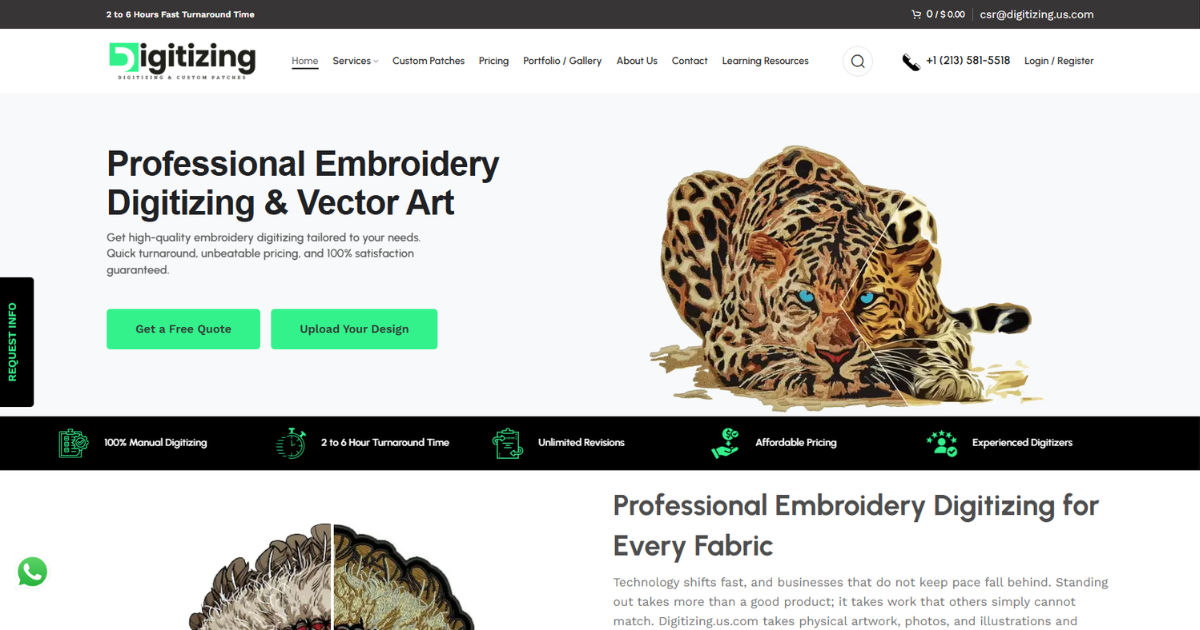
Many businesses that work with USA Digitizing Services use embroidery digitizing software to convert artwork into machine-readable embroidery files. Without proper digitizing, even the most attractive design cannot be stitched accurately on fabric. This software acts as a bridge between artwork and embroidery machines, ensuring every stitch is placed correctly.

As the embroidery industry continues to grow, understanding what embroidery digitizing software is used for becomes increasingly important. Whether you are a beginner, business owner, or embroidery professional, knowing its functions can help you achieve better embroidery results and improve production efficiency.

Understanding Embroidery Digitizing Software

Embroidery digitizing software is a specialized computer program designed to transform images, logos, text, and artwork into embroidery machine files.

Unlike standard graphic design software, embroidery digitizing software creates stitch paths rather than simply displaying images. It tells embroidery machines exactly where to place stitches, what stitch types to use, and how dense the stitching should be.

Professional embroidery companies and USA Digitizing Services depend on these programs to create accurate embroidery files that machines can interpret and execute.

The software helps users manage every aspect of embroidery production, including:

  • Stitch creation
  • Stitch direction
  • Density control
  • Underlay settings
  • Color sequencing
  • Lettering
  • Appliqué design
  • File conversion

Without embroidery digitizing software, embroidery machines would not know how to reproduce artwork on fabric.

Why Embroidery Digitizing Software Is Important

Embroidery machines cannot read standard image formats such as JPG, PNG, SVG, or PDF files directly.

A logo may look perfect on a computer screen, but an embroidery machine requires specific instructions to recreate it with thread.

Embroidery digitizing software provides those instructions.

The importance of embroidery digitizing software includes:

  • Improved embroidery quality
  • Better stitch accuracy
  • Reduced thread breaks
  • Faster production
  • Consistent results
  • Professional appearance
  • Fabric-specific adjustments

Many businesses partner with USA Digitizing Services because professional digitizers understand how to use software effectively to create high-quality embroidery files.

Converting Artwork Into Embroidery Files

One of the primary uses of embroidery digitizing software is converting artwork into embroidery machine formats.

This process is known as digitizing.

The software analyzes artwork and allows the digitizer to assign stitch types to different parts of the design.

For example:

  • Text may use satin stitches
  • Large areas may use fill stitches
  • Fine details may use running stitches

The final file can then be saved in machine-readable formats such as:

  • DST
  • PES
  • EXP
  • JEF
  • VP3
  • HUS

Professional USA Digitizing Services often handle this conversion process to ensure optimal stitch quality.

Creating Stitch Paths

Every embroidery design requires a stitch path.

A stitch path determines how the embroidery machine moves while stitching a design.

Digitizing software allows users to:

  • Control stitch sequence
  • Minimize machine trims
  • Reduce jump stitches
  • Improve production speed
  • Enhance embroidery quality

Proper stitch path planning prevents unnecessary thread cuts and improves efficiency.

Experienced professionals at USA Digitizing Services carefully create stitch paths to ensure smooth embroidery production.

Managing Stitch Types

Embroidery digitizing software offers several stitch types.

Each stitch serves a specific purpose.

Satin Stitches

Satin stitches are commonly used for:

  • Lettering
  • Borders
  • Small shapes
  • Decorative elements

They create a smooth and shiny appearance.

Fill Stitches

Fill stitches cover larger areas.

They are commonly used for:

  • Backgrounds
  • Large logos
  • Solid shapes

Running Stitches

Running stitches are used for:

  • Fine details
  • Outlines
  • Decorative accents

Professional USA Digitizing Services understand when and where each stitch type should be applied for the best results.

Adjusting Stitch Density

Stitch density refers to how closely stitches are placed together.

Embroidery digitizing software allows users to adjust density based on:

  • Fabric type
  • Design size
  • Thread thickness
  • Design complexity

Proper density helps prevent:

  • Fabric puckering
  • Thread breaks
  • Distorted designs

Many beginners struggle with density settings, which is why businesses often rely on USA Digitizing Services for professional digitizing.

Creating Underlay Stitches

Underlay stitches are hidden stitches placed beneath visible embroidery.

Their purpose includes:

  • Stabilizing fabric
  • Supporting top stitches
  • Improving design appearance
  • Preventing shifting

Embroidery digitizing software allows users to customize underlay settings for different materials.

Common underlay types include:

  • Edge run
  • Zigzag
  • Center run
  • Tatami underlay

Professional USA Digitizing Services use underlay strategically to enhance embroidery quality.

Digitizing Logos

Logo digitizing is one of the most common applications of embroidery digitizing software.

Businesses frequently embroider logos on:

  • Uniforms
  • Polo shirts
  • Hats
  • Jackets
  • Promotional products

Digitizing software converts logos into stitch files while preserving branding accuracy.

Professional USA Digitizing Services specialize in logo digitizing because corporate branding requires precise reproduction.

Creating Custom Embroidery Designs

Embroidery digitizing software is not limited to converting existing artwork.

Users can also create original embroidery designs from scratch.

Features often include:

  • Drawing tools
  • Shape creation
  • Text editing
  • Pattern generation
  • Stitch simulation

This allows designers to develop unique embroidery artwork without needing separate graphic design software.

Many creative professionals use USA Digitizing Services to transform their custom ideas into production-ready embroidery files.

Designing Embroidered Text

Lettering is a major function of embroidery digitizing software.

The software includes built-in embroidery fonts designed specifically for stitching.

Users can customize:

  • Font styles
  • Letter spacing
  • Stitch density
  • Text size
  • Alignment

Unlike standard fonts, embroidery fonts are optimized for thread and fabric behavior.

Professional USA Digitizing Services often digitize custom lettering for uniforms, sportswear, and branded apparel.

Supporting Multiple Fabric Types

Different fabrics react differently to embroidery.

Embroidery digitizing software helps users adjust settings for:

  • Cotton
  • Polyester
  • Denim
  • Fleece
  • Leather
  • Canvas
  • Performance fabrics

These adjustments help maintain embroidery quality regardless of material.

Many businesses choose USA Digitizing Services because professionals understand how various fabrics influence stitch behavior.

Reducing Production Errors

Embroidery errors can be expensive.

Common problems include:

  • Thread breaks
  • Misalignment
  • Gaps in stitching
  • Fabric distortion
  • Registration issues

Embroidery digitizing software helps identify and correct these issues before production begins.

Professional USA Digitizing Services use advanced software features to minimize costly mistakes.

Improving Production Efficiency

Efficient production is critical for embroidery businesses.

Digitizing software improves efficiency by:

  • Automating processes
  • Optimizing stitch paths
  • Reducing machine stops
  • Minimizing thread changes
  • Simplifying design editing

The result is faster turnaround times and increased productivity.

Many embroidery companies depend on USA Digitizing Services to streamline production workflows.

Previewing Designs Before Stitching

Most modern embroidery digitizing software includes simulation features.

These features allow users to preview how a design will stitch before production begins.

Benefits include:

  • Error detection
  • Quality assessment
  • Color evaluation
  • Stitch sequence review

This helps avoid wasted materials and production delays.

Professional USA Digitizing Services often test designs digitally before approving them for embroidery.

Color Management

Thread color management is another important software function.

Embroidery digitizing software allows users to:

  • Assign thread colors
  • Organize color sequences
  • Match brand colors
  • Reduce thread changes

Accurate color management is essential for maintaining brand consistency.

Many businesses rely on USA Digitizing Services for precise thread color matching.

Creating Appliqué Designs

Appliqué combines fabric pieces with embroidery stitches.

Digitizing software helps create:

  • Placement stitches
  • Tack-down stitches
  • Cover stitches

Appliqué is widely used because it reduces stitch counts and creates unique visual effects.

Professional USA Digitizing Services frequently digitize appliqué designs for sportswear and fashion products.

Editing Existing Embroidery Files

Embroidery digitizing software also allows users to modify existing designs.

Common edits include:

  • Resizing
  • Text changes
  • Color adjustments
  • Stitch modifications
  • Density corrections

This flexibility saves time and reduces the need to recreate designs from scratch.

Businesses often use USA Digitizing Services when they need professional file modifications.

Resizing Embroidery Designs

Resizing embroidery designs is more complex than resizing images.

When a design changes size, stitch properties must also be adjusted.

Embroidery digitizing software recalculates:

  • Stitch lengths
  • Density
  • Underlay
  • Pull compensation

Professional USA Digitizing Services ensure resized designs maintain quality and appearance.

Supporting Different Machine Brands

Embroidery machines use different file formats.

Digitizing software supports machine compatibility by converting designs into formats required by various brands.

Common machine brands include:

  • Brother
  • Tajima
  • Barudan
  • Janome
  • Bernina
  • Melco

Professional USA Digitizing Services regularly create files compatible with multiple machine types.

Creating 3D Puff Embroidery

3D puff embroidery is commonly used on hats and caps.

This technique creates raised embroidery effects using foam beneath the stitching.

Digitizing software helps adjust:

  • Stitch density
  • Satin widths
  • Foam coverage
  • Stitch sequencing

Experienced USA Digitizing Services understand the specialized settings needed for successful 3D puff embroidery.

Supporting Small Lettering

Small lettering presents unique embroidery challenges.

Digitizing software helps optimize:

  • Stitch width
  • Density
  • Underlay
  • Pull compensation

Proper settings ensure readability and clean stitching.

Many customers seek USA Digitizing Services specifically for difficult small-text projects.

Enhancing Design Quality

Embroidery digitizing software provides numerous tools that improve design quality.

These tools help users:

  • Refine details
  • Improve stitch flow
  • Reduce distortions
  • Enhance durability

Professional USA Digitizing Services leverage these features to produce premium-quality embroidery files.

Helping Businesses Scale

As embroidery businesses grow, managing larger volumes of orders becomes essential.

Digitizing software supports scalability through:

  • Design libraries
  • Workflow automation
  • Batch processing
  • File organization

This allows businesses to handle more projects efficiently.

Many growing companies partner with USA Digitizing Services to maintain quality while increasing production capacity.

Common Industries Using Embroidery Digitizing Software

Embroidery digitizing software is used across many industries.

Apparel Industry

Used for:

  • Fashion brands
  • Uniforms
  • Corporate clothing

Sports Industry

Used for:

  • Team jerseys
  • Caps
  • Athletic apparel

Promotional Products

Used for:

  • Branded merchandise
  • Giveaways
  • Event apparel

Hospitality Industry

Used for:

  • Hotel uniforms
  • Restaurant apparel
  • Staff branding

Education Sector

Used for:

  • School uniforms
  • College merchandise
  • Team apparel

Many organizations work with USA Digitizing Services to create professional embroidery files for these applications.

Features Found in Modern Digitizing Software

Today's embroidery digitizing software includes powerful features such as:

  • Auto-digitizing
  • Manual digitizing
  • Stitch simulation
  • Lettering tools
  • Appliqué creation
  • 3D puff support
  • Density control
  • File conversion
  • Design editing
  • Color management

These capabilities make embroidery production more efficient and accurate.

Professional USA Digitizing Services utilize advanced software features to achieve superior embroidery results.

Manual Digitizing vs Auto Digitizing

Manual Digitizing

Manual digitizing offers:

  • Greater control
  • Better quality
  • Precise stitch placement
  • Professional results

Auto Digitizing

Auto digitizing offers:

  • Faster processing
  • Beginner-friendly operation
  • Basic design conversion

However, manually digitized designs generally produce better embroidery quality.

Many businesses choose USA Digitizing Services because experienced digitizers manually optimize designs rather than relying solely on automatic tools.

Choosing the Right Digitizing Software

When selecting embroidery digitizing software, users should consider:

  • Ease of use
  • Available features
  • Machine compatibility
  • Customer support
  • Learning curve
  • Cost

Popular software options range from beginner-friendly programs to advanced professional platforms.

Many businesses also outsource to USA Digitizing Services instead of investing heavily in software training and licensing.

The Future of Embroidery Digitizing Software

Technology continues to transform the embroidery industry.

Future developments may include:

  • Artificial intelligence digitizing
  • Cloud-based workflows
  • Enhanced automation
  • Improved stitch simulation
  • Faster processing speeds

These innovations will make embroidery production even more efficient and accessible.

As technology evolves, USA Digitizing Services will continue adapting to deliver increasingly sophisticated embroidery solutions.

Conclusion

Embroidery digitizing software plays a vital role in modern embroidery production. It transforms artwork into machine-readable stitch files, controls stitch paths, manages density, creates underlay, supports lettering, and ensures embroidery machines produce accurate designs. Without this software, high-quality machine embroidery would not be possible.

From logo digitizing and custom design creation to appliqué development and 3D puff embroidery, the software serves as the foundation of professional embroidery work. It helps businesses improve efficiency, reduce errors, maintain brand consistency, and achieve superior embroidery quality.

Whether you are an embroidery hobbyist, small business owner, or large-scale manufacturer, understanding the uses of embroidery digitizing software can help you make informed decisions and improve your embroidery results. Many organizations continue to rely on USA Digitizing Services because professional digitizers possess the expertise needed to maximize software capabilities and produce outstanding embroidery files that perform flawlessly during production.


Related Post

A Comprehensive Steer To Home Appliance Resort: How To Troubleshoot, Fix, And Wield Your Requirement HouseholdA Comprehensive Steer To Home Appliance Resort: How To Troubleshoot, Fix, And Wield Your Requirement Household

Home appliances have become an integral part of life, helping us manage tasks with efficiency and ease. From refrigerators to lavation machines, dishwashers to microwaves, these devices are designed to simplify routines. However, like any patch of engineering science, they are not immune to wear and tear. When an widge breaks down or experiences malfunctions, many people face the quandary of whether to resort it themselves or hire a professional. Understanding the rudiments of home contraption repair can save you time, money, and thwarting. This clause explores the park issues with house appliances and offers some staple troubleshooting tips.

Appliances are machines with various components that work in sync to execute specific tasks. As such, diagnosis issues often requires a combination of knowledge and solitaire. The first step in troubleshooting any convenience is to identify the symptoms. For example, if a refrigerator isn t cooling decently, it could be a trouble with the thermoregulator, optical condenser coils, or refrigerant levels. Similarly, a lavation simple machine that won t spin might have a destroyed lid swop or a trouble with the motor. Understanding the possible causes of these issues can guide you toward the right solution.

One of the first things to check in any common dishwasher issues resort is whether it s receiving great power. This might voice simpleton, but many contraption malfunctions pass plainly because the device is not decent obstructed in, or the breaker has been tripped. Before diving event into more complicated fixes, make sure the gizmo is wired to a world power seed and is turned on. For issues that broaden beyond great power loss, it s helpful to refer the user manual of arms. Most appliances come with a troubleshooting steer that includes green problems and potency solutions.

For more complex issues, you might need to test specific components. For example, a inaccurate heating element in an oven may require you to test the with a multimeter to see if it has continuity. If the warming element shows no , it needs to be replaced. Similarly, in a washing machine, the belt or motor could be the perpetrator, requiring a more in-depth inspection. Repairing these components often involves disassembling the gismo, which should only be done if you feel wide and have the necessary tools.

Safety is material when dealing with contraption repairs. Always unplug the contraption before attempting any upkee or repair. For gas-powered like stoves, make sure the gas provide is sour off to keep accidents. Using the correct tools is also vital to keep combat injury and to the gadget. If you re hesitant about how to go forward with a repair or the write out seems beyond your expertness, don t waver to call in a professional person. Some repairs, such as those involving physical phenomenon components or gas lines, are best left to licensed technicians.

Prevention is always better than cure when it comes to home contraption sustainment. Regular cleanup and care can prolong the lifespan of your appliances. For example, cleanup the condenser coils of your icebox and ensuring specific ventilation can keep it running efficiently. Similarly, maintaining your washing simple machine by cleanup the filter and checking for blockages can help keep green malfunctions. By establishing a habitue sustentation procedure, you can avoid many commons contrivance breakdowns and keep off dearly-won repairs.

In ending, home contraption repair can be a controllable task if approached with care and understanding. Troubleshooting and repairing minor issues can often be done severally with the right noesis and tools. However, when in , it s always well to seek professional person assistance, especially for complex or hazardous problems. Regular upkee and well-timed repairs can help keep your household appliances in good workings order, ensuring they uphold to do you efficiently for age to come.

What Are the Essential Types of Home Electrical Circuits?What Are the Essential Types of Home Electrical Circuits?

Electricity is an essential part of modern life, powering everything from lights and appliances to computers and heating systems.

Understanding Electrical Circuits in your home is crucial for safety, energy efficiency, and troubleshooting electrical problems.

Every home has a network of circuits that manage the flow of electricity, and each type serves a specific purpose.

In this guide, PowerLink Co Pakistan will explore the essential types of home Electrical Circuits, how they work, their components, and safety considerations.

Introduction to Home Electrical Circuits

At its core, a circuit is a closed path through which electricity flows. In homes, Electrical Circuits are designed to deliver power safely and efficiently to outlets, switches, and appliances. A typical household circuit includes wires, a breaker or fuse, outlets, switches, and sometimes lighting fixtures. The electricity flows from the main panel to various parts of the home, and the type of circuit determines how much load it can handle and what it can power.

Understanding these circuits is important not only for homeowners but also for anyone learning about electricity. Knowing the different types helps in installing new appliances, preventing overloads, and keeping your home safe from electrical hazards.

Main Components of Home Electrical Circuits

Before diving into the types, it’s essential to understand the components that make up Electrical Circuits:

  1. Circuit Breaker or Fuse – Protects the circuit from overload by cutting off electricity if the current exceeds a safe limit.

  2. Wires – Conduct electricity from the power source to appliances and devices. Typically, copper or aluminum wires are used.

  3. Outlets (Receptacles) – Provide a point to plug in devices and appliances.

  4. Switches – Control the flow of electricity to lights or other devices.

  5. Grounding System – Directs excess electricity safely into the ground to prevent shocks.

  6. Load – Any electrical device or appliance that consumes electricity.

By understanding these components, you can better grasp how different circuits operate and why specific designs are used for certain applications.

Types of Home Electrical Circuits

Home Electrical Circuits are broadly categorized based on their function and capacity. The main types include:

1. Lighting Circuits

Lighting circuits are some of the most common Electrical Circuits in homes. They are designed to power ceiling lights, wall fixtures, and sometimes lamps through outlets.

  • Voltage: Typically 120V in most households.

  • Capacity: Usually rated for 15 amps.

  • Purpose: To provide consistent and safe lighting throughout the home.

Lighting circuits often include multiple switches and may feature special arrangements like three-way switches, which allow a single light to be controlled from two different locations, such as at the top and bottom of a staircase.

2. General Purpose Circuits

These circuits are designed for everyday outlets used for plugging in common household devices like televisions, laptops, and kitchen appliances.

  • Voltage: 120V standard in most homes.

  • Capacity: Usually 15 to 20 amps.

  • Purpose: To power general household devices safely.

General-purpose circuits may be shared among several outlets, but care must be taken not to overload them with high-power appliances like microwaves or air conditioners.

3. Dedicated Circuits

Dedicated circuits are designed to supply power to a single appliance or device. These are essential for high-power appliances that require more energy than standard outlets can safely provide.

  • Common Appliances: Refrigerators, washing machines, ovens, air conditioners, and water heaters.

  • Voltage: Can be 120V or 240V depending on the appliance.

  • Capacity: Varies from 15 to 50 amps.

  • Purpose: Ensures the appliance gets enough power without overloading other circuits.

Dedicated circuits are crucial for maintaining safety and efficiency. Overloading a general-purpose circuit with a high-power appliance can lead to breaker trips, damaged appliances, or even electrical fires.

4. Switch Circuits

Switch circuits are designed specifically to control devices like lights or fans. They often work in combination with lighting circuits or dedicated circuits for devices like ceiling fans.

  • Types of Switches:

    • Single-pole switch: Controls a device from one location.

    • Three-way switch: Allows control from two locations.

    • Four-way switch: Lets control from three or more locations.

Switch circuits are fundamental in home design because they provide convenience and control over electrical devices. Proper wiring ensures that the switches function correctly without hazards.

5. Appliance Circuits

Appliance circuits are similar to dedicated circuits but can sometimes include multiple similar devices on a single circuit. Examples include kitchen appliance circuits or laundry circuits.

  • Voltage: 120V or 240V depending on the appliance.

  • Purpose: Provides consistent, uninterrupted power for essential household appliances.

  • Capacity: Designed according to the total power requirements of all connected devices.

Appliance circuits must be carefully planned to avoid overloads, especially in areas like the kitchen, where multiple high-power devices may run simultaneously.

6. GFCI Circuits (Ground Fault Circuit Interrupter)

GFCI circuits are a special type of Electrical Circuits designed for safety. They protect people from electrical shocks, especially in wet areas like bathrooms, kitchens, and outdoor spaces.

  • Function: Detects leakage currents and shuts off the circuit immediately.

  • Where Used: Bathrooms, kitchens, garages, basements, outdoor outlets.

  • Importance: Prevents serious electrical shocks and accidents.

GFCI outlets are mandatory in many building codes because of their life-saving capability. They are particularly important where water and electricity are present together.

7. AFCI Circuits (Arc Fault Circuit Interrupter)

AFCI circuits are designed to prevent fires caused by faulty wiring or damaged electrical cords.

  • Function: Detects arcing conditions in the wires and cuts off power.

  • Where Used: Bedrooms, living rooms, and other areas with significant wiring.

  • Importance: Reduces the risk of electrical fires caused by old or damaged wiring.

These circuits are increasingly required by modern electrical codes to improve home safety.

8. 240-Volt Circuits

Some appliances require higher voltage to operate efficiently, such as ovens, dryers, and HVAC systems. These circuits are designed for heavy-duty applications.

  • Voltage: 240V

  • Capacity: Typically 30–50 amps depending on the appliance.

  • Purpose: Powers high-demand appliances safely and efficiently.

Installing 240V circuits often requires professional expertise because incorrect wiring can be extremely dangerous.

9. Multi-Wire Branch Circuits

A multi-wire branch circuit shares a neutral wire between two separate hot wires, allowing multiple outlets or devices to be powered efficiently.

  • Purpose: Reduces the number of wires needed while maintaining safety.

  • Applications: Often used in kitchens or workshops with many outlets.

These circuits save wiring material and simplify panel connections, but must be installed correctly to avoid neutral overloads.

10. Outdoor Circuits

Outdoor circuits are designed for lighting, irrigation systems, and exterior outlets. They require weatherproof components and often include GFCI protection.

  • Purpose: Safe and reliable outdoor power supply.

  • Components: Weather-resistant outlets, protective covers, proper grounding.

Outdoor circuits must be durable and safe to withstand environmental conditions while preventing electrical hazards.

How Electrical Circuits Are Installed

Proper installation is critical for the functionality and safety of home Electrical Circuits. Here are the basic steps:

  1. Planning: Determine the number and type of circuits needed based on appliances and devices.

  2. Wiring: Run wires from the main electrical panel to outlets, switches, and appliances.

  3. Protection: Install circuit breakers or fuses to prevent overloads.

  4. Testing: Verify the circuits with testing devices to ensure proper functionality and safety.

  5. Labeling: Label each circuit at the main panel for easy identification during maintenance or emergencies.

Professional electricians follow strict safety codes to prevent hazards like overloading, short circuits, and fires.

Safety Tips for Home Electrical Circuits

Safety is the most critical aspect of managing Electrical Circuits in your home. Here are essential tips:

  • Never overload circuits by plugging too many devices into one outlet.

  • Always use GFCI outlets in wet areas.

  • Inspect wires and outlets regularly for damage.

  • Avoid DIY wiring unless you are trained and certified.

  • Keep flammable materials away from electrical devices.

  • Use surge protectors to protect sensitive electronics.

By following these guidelines, you can reduce the risk of shocks, fires, and appliance damage.

Common Problems in Home Electrical Circuits

Even well-designed circuits can face issues over time. Common problems include:

  • Tripped Circuit Breakers – Usually caused by overload or short circuits.

  • Flickering Lights – May indicate loose wiring or overloaded circuits.

  • Burning Smell – Often a warning of overheating wires or outlets.

  • Dead Outlets – Could result from tripped breakers or damaged wiring.

Regular maintenance and professional inspections can help detect and fix these issues before they become serious.

Upgrading Your Home Electrical Circuits

Older homes may have outdated wiring or insufficient circuits for modern electrical demands. Upgrading Electrical Circuits can improve safety and efficiency. Common upgrades include:

  • Replacing old fuses with circuit breakers.

  • Adding dedicated circuits for high-power appliances.

  • Installing AFCI and GFCI protection.

  • Upgrading 120V circuits to 240V for heavy-duty devices.

An upgrade not only ensures safety but also supports the growing number of electronic devices in modern households.

Conclusion

Understanding the essential types of home Electrical Circuits is vital for every homeowner. From simple lighting circuits to complex multi-wire branch circuits, each type plays a critical role in delivering electricity safely and efficiently. By knowing how these circuits work, their purpose, and the safety measures required, you can maintain a secure and functional home environment. Proper installation, regular inspection, and timely upgrades ensure that your home’s electrical system can handle current needs while preparing for future demands.

Whether you are a student, a new homeowner, or someone interested in electrical work, grasping the fundamentals of Electrical Circuits is an important step toward a safer, smarter, and more energy-efficient home.

Word count: 3,041

The Ultimate Guide to Building a Successful Company in Today’s MarketThe Ultimate Guide to Building a Successful Company in Today’s Market

Building a successful company in today’s dynamic and often volatile market requires a strategic approach, innovative thinking, and a commitment to continuous improvement. With ever-evolving consumer preferences, rapid technological advancements, and increased competition, entrepreneurs and business leaders must navigate various challenges to achieve long-term success. This ultimate guide outlines essential strategies and best practices for building a thriving company in today’s market.

1. Understand Your Market

Conduct Thorough Market Research

Before launching a business, it is vital to understand the market landscape. Conduct thorough market research to identify industry trends, target demographics, and competitor strategies. Utilize surveys, focus groups, and online analytics to gather insights into consumer behavior and preferences.

Define Your Unique Value Proposition (UVP)

Your UVP sets your business apart from competitors. Clearly articulate what makes your product or service unique and how it meets the needs of your target audience. A compelling UVP not only attracts customers but also builds brand loyalty.

2. Develop a Comprehensive Business Plan

Outline Your Goals and Objectives

A diadan holdings well-structured business plan serves as a roadmap for your company’s growth. Define your short-term and long-term goals, along with measurable objectives to track your progress. Consider aspects such as sales targets, market share, and customer acquisition.

Include Financial Projections

Financial planning is crucial for sustainability. Include detailed financial projections, such as revenue forecasts, expense estimates, and cash flow analysis. This information will help you understand your funding needs and guide your financial decisions.

3. Build a Strong Brand Identity

Create a Memorable Brand

Your brand is more than just a logo; it encompasses your company’s values, mission, and personality. Develop a brand identity that resonates with your target audience and conveys your UVP. Consistent messaging across all platforms builds recognition and trust.

Leverage Digital Marketing

In today’s digital age, effective marketing strategies are essential for brand visibility. Utilize social media, content marketing, SEO, and email campaigns to engage with your audience. Regularly share valuable content that addresses customer needs and positions your brand as an industry leader.

4. Focus on Customer Experience

Prioritize Customer Engagement

Exceptional customer experience is a key driver of success. Prioritize customer engagement by actively listening to their feedback and addressing their concerns. Implement customer support channels, such as chatbots or helplines, to provide timely assistance.

Implement Personalization

Consumers increasingly expect personalized experiences. Use data analytics to understand customer preferences and tailor your offerings accordingly. Personalized marketing campaigns, product recommendations, and targeted communications can significantly enhance customer satisfaction.

5. Embrace Innovation and Agility

Foster a Culture of Innovation

Encourage a culture of creativity and innovation within your organization. Allow employees to experiment with new ideas, and establish platforms for sharing insights. Innovation can lead to the development of new products, services, or processes that meet emerging market demands.

Be Agile and Adaptable

In a rapidly changing market, agility is essential. Implement agile methodologies that allow your team to respond quickly to changes in consumer behavior or industry trends. Regularly review and adjust your strategies to remain competitive and relevant.

6. Build a Strong Team

Hire for Culture Fit and Skills

A successful company is built on the strength of its team. Hire individuals who not only possess the necessary skills but also align with your company’s values and culture. A cohesive team contributes to a positive work environment and drives organizational success.

Invest in Employee Development

Support your employees’ growth through training and development opportunities. Providing resources for skill enhancement fosters loyalty and improves overall performance. A well-trained workforce is better equipped to adapt to changing market demands.

7. Optimize Operations

Streamline Processes

Efficiency is key to success. Regularly review your operational processes to identify areas for improvement. Implement automation tools and technologies to streamline tasks, reduce costs, and enhance productivity.

Monitor Performance Metrics

Establish key performance indicators (KPIs) to measure the success of your business. Monitor metrics such as sales growth, customer retention rates, and operational efficiency. Analyzing performance data enables you to make informed decisions and adjust strategies as needed.

8. Foster Relationships and Networking

Build Strong Partnerships

Collaboration can open doors to new opportunities. Foster relationships with other businesses, suppliers, and industry influencers. Partnerships can lead to joint ventures, co-marketing efforts, and expanded reach.

Engage in Networking

Attend industry events, conferences, and networking meetups to connect with like-minded professionals. Building a strong network can provide valuable insights, mentorship, and potential business opportunities.

9. Prepare for Challenges

Develop Risk Management Strategies

In business, challenges are inevitable. Develop risk management strategies to identify potential threats and outline contingency plans. This proactive approach ensures your business can respond effectively to unexpected events.

Embrace Resilience

Cultivate a culture of resilience within your organization. Encourage your team to view challenges as opportunities for growth and learning. A resilient mindset enables businesses to adapt and thrive in the face of adversity.

Stay Informed on Market Trends

Continuously monitor industry trends, consumer behaviors, and emerging technologies. Staying informed allows you to anticipate changes and adapt your strategies accordingly. Subscribing to industry publications and following thought leaders can keep you updated on the latest developments.

Be Open to Change

Flexibility is vital for long-term success. Be open to evolving your business model, product offerings, or marketing strategies as market conditions shift. Embrace change as a constant and leverage it as an opportunity to innovate.

Conclusion

Building a successful company in today’s market requires a strategic approach, a commitment to innovation, and a focus on customer experience. By understanding your market, developing a comprehensive business plan, building a strong brand, fostering a culture of agility and resilience, and continually monitoring trends, you can position your business for long-term success. Embrace the challenges and opportunities that come your way, and remember that adaptability is key in navigating the ever-changing landscape of today’s business world.

The And Benefits Of Online ShoppingThe And Benefits Of Online Shopping

Online shopping has become an more and more nonclassical way to buy out goods and services in the digital age. Gone are the days of having to physically go to a lay in to buy something- now, with just a few clicks, you can have anything from groceries to electronics delivered right to your doorstep. The convenience and benefits of online shopping are incontrovertible, and it is no storm that more and more people are choosing to make their purchases online.One of the main reasons people turn to online shopping is for its convenience. With just an internet and a information processing system or smartphone, you can shop from the solace of your own home. This eliminates the need to trip to natural science stores, deal with dealings and crowds, and pass time intelligent for items. Online shopping also allows you to shop at any time, even outside of regular put in hours. This is especially useful for those with busy schedules or for populate living in remote areas without easy access to physical stores.In summation to , Bear shopping also offers a wider survival of products to select from. Physical stores are limited by their physical space, meaning they can only sprout a certain add up of products. However, online stores have an space practical space and can a much bigger variety of products. This gives shoppers the choice to liken prices and features from different brands and select the best option for their needs and budget.Another major profit of online shopping is the power to well find good deals and discounts. Online retailers often volunteer discounts and promotions that you may not find in physical stores. You can also use damage websites to find the best deals on a particular product from various online retailers. Additionally, many online stores volunteer free transportation or have turn down shipping fees compared to physical stores, making it even more cost-effective to shop online.For those who are concerned about the safety of online transactions, most online retailers have procure defrayal methods that protect your personal and business selective information. This substance you can shop with public security of mind knowing that your information is safe. Furthermore, in the rare of receiving a faulty or disreputable product, most online retailers have easy bring back and refund policies, making it hassle-free to remediate any issues.Not only is online shopping handy, but it also makes it easier for people with mobility or accessibility issues to make purchases. Older adults or individuals with disabilities may find it thought-provoking to physically go to a lay in and shop, but with online shopping, they can easily make purchases from the comfort of their own homes. This also applies to people support in geographical area areas with express access to natural science stores, gift them the chance to buy products that may not be available in their local anesthetic area.In ending, the and benefits of online shopping make it a popular choice for many consumers. From saving time and money to providing a wider selection of products and to those with availableness needs, online shopping has transformed the way people buy goods and services. With the continuing advancements in technology, it is safe to say that online shopping will carry on to be a accessible and preferable method of shopping for many people in the old age to come.

Go Digital: Start Your Itc Franchise Online NowGo Digital: Start Your Itc Franchise Online Now

In the Bodoni font business landscape, digital transmutation has affected every industry, and the Fast-Moving Consumer Goods(FMCG) sector is no . Among the most sought-after opportunities for investors and entrepreneurs in India is the ITC enfranchisement. With the digital era qualification processes more accessible and expedient, starting an ITC enfranchisement online has never been easier. From registration to stage business management, the online weapons platform streamlines every step, qualification this stake an attractive and rewarding pick.

Why Choose an ITC Franchise?

ITC Limited is one of India s largest and most reputable conglomerates, with a diverse presence in FMCG, cordial reception, paperboards, promotion, and agriculture. Among these, the FMCG sector has shown consistent growth and profitability, qualification ITC a reliable brand for investment funds. An ITC enfranchisement allows investors to purchase the stigmatize s reputation, tone products, and proved cater to start a business with tokenish risk.

Owning an ITC enfranchisement not only provides access to a wide range of products, from prepackaged foods and personal care items to lifestyle products but also ensures steady demand. The stigmatize s credibility ensures that customers are more likely to trust and buy its products, which translates into a more secure revenue stream for franchisees.

The Shift to Online Applications

Traditionally, starting a franchise mired a lot of paperwork, in-person visits, and long waiting periods. Today, ITC has easy this work by allowing potency investors to utilise online. The whole number application work is user-friendly and efficient, sanctioning entrepreneurs to take their enfranchisement call for from the comfort of their home or power.

The online weapons platform guides applicants through every step, including selecting the type of enfranchisement, sympathy the investment requirements, and submitting the necessary documents. This whole number go about saves time, reduces bureaucratism, and ensures a obvious practical application process. For busy professionals and first-time investors, this is a considerable advantage.

Investment and Profit Potential

Starting an ITC enfranchisement is a moneymaking byplay opportunity, but understanding the fiscal aspects is crucial. The investment funds depends on the type of enfranchisement or distributorship chosen. Generally, the initial expenses wrap up the enfranchisement fee, infrastructure setup, take stock procurance, and operational costs. ITC provides elaborate guidance on the lower limit working capital required, making it easier for investors to plan their budget effectively.

The profit potentiality in an ITC franchise is substantial. With the accompany s product portfolio and high stigmatise recognition, franchisees can accomplish substantial gross revenue volumes. Additionally, ITC provides on-going subscribe in terms of selling, cater management, and content strategies, portion franchisees maximize lucrativeness. Many enfranchisement owners describe calm growth in tax income within the first year of surgical procedure, highlight the business s potential for long-term succeeder.

Advantages of Going Digital

Starting an ITC franchise online comes with several advantages:

  1. Convenience: Investors can complete the practical application work without visiting septuple offices or branches.
  2. Transparency: The online platform allows you to traverse the position of your application and empathise the next steps clearly.
  3. Speed: Digital applications significantly reduce waiting times, allowing franchisees to start trading operations faster.
  4. Accessibility: Entrepreneurs from any part of India can employ for an ITC franchise without geographic restrictions.
  5. Guidance: The online platform provides step-by-step book of instructions, FAQs, and subscribe to simplify the process.

Support and Training

One of the standout features of an ITC enfranchisement is the comprehensive examination support provided to franchisees. Once sanctioned, investors receive training in take stock direction, sales techniques, and customer service. ITC also provides ongoing marketing assistance, promotional materials, and whole number tools to help franchisees manage their byplay with efficiency. This support ensures that even first-time stage business owners can run their franchise with success and productively.

Conclusion

In nowadays s integer world, start a stage business has become more accessible than ever. The ITC Franchise offers a unusual opportunity for investors and entrepreneurs to record the booming FMCG sector with a trustworthy brand and a profitable business model. By going integer, wishful franchisees can complete the practical application work online, reduce hassle, and take up their stage business with trust.

With strong denounce realisation, a different production portfolio, comp support, and the of online applications, an ITC enfranchisement represents a ache investment funds for those looking to build a property and rewarding business. For anyone bore to search the potency of the FMCG commercialise, there has never been a better time to go integer and start your ITC franchise online nowadays.